Web design services cover far more than choosing colors, fonts, and attractive images. A professionally designed website should communicate what a business offers, help visitors find information quickly, work smoothly across devices, and make the next step obvious. For companies comparing providers, the real question is not simply who can create a good-looking website, but who can build one that supports business goals.
A strong project usually combines visual design, user experience, responsive development, content structure, performance, accessibility, and search visibility. These elements need to work together rather than being treated as separate tasks.
What Do Web Design Services Include?
The exact scope varies between agencies, freelancers, and development studios, but a complete website project can include several connected areas:
| Service area | What it typically covers | Business value |
|---|---|---|
| UX planning | Navigation, page structure, user journeys | Makes information easier to find |
| Visual design | Layout, typography, colors, imagery | Builds a consistent brand experience |
| Responsive design | Desktop, tablet, and mobile layouts | Supports visitors across devices |
| Development | HTML, CSS, JavaScript, CMS integration | Turns designs into a working website |
| SEO foundations | Page structure, titles, links, crawlability | Helps search engines understand content |
| Performance | Image optimization, code efficiency, caching | Improves loading and usability |
The best approach depends on the website’s purpose. A local service company may need prominent contact and booking options, while an online publication may need clear categories, article navigation, and an efficient content-management system.
Why Website Structure Matters
A website can contain excellent information and still frustrate visitors if the structure is confusing. Navigation should reflect the way people actually look for information.
Important pages should be easy to reach without forcing visitors through unnecessary steps. Clear headings, descriptive navigation labels, readable text, and consistent page layouts can make a substantial difference.
Search engines also need understandable page structures. Google recommends creating helpful, people-first content and using descriptive locations such as titles, headings, alt text, and link text to communicate what pages contain.
For that reason, web design services should consider SEO during planning rather than adding it after the website has already been built.
Responsive Design Is a Basic Requirement
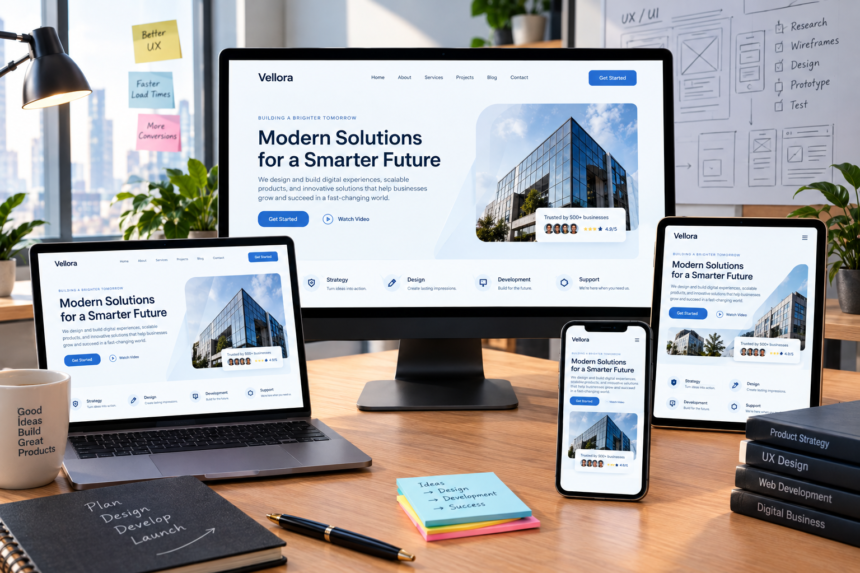
Visitors may reach a website from a desktop computer, phone, tablet, or a different screen size. Responsive design allows the layout to adapt instead of requiring users to constantly zoom, scroll sideways, or search for controls.
Mobile design involves more than shrinking a desktop page. Navigation, buttons, forms, images, spacing, and typography should remain usable on smaller screens.
Performance matters too. Large images, unnecessary scripts, excessive animations, and poorly configured plugins can make pages slower. A cleaner implementation can improve the experience while making the site easier to maintain.
💡 Pro Tip: Before approving a website design, test the most important user journey on an actual phone. Check how quickly the page loads, whether the navigation is easy to use, whether forms are comfortable to complete, and whether the main call-to-action is immediately visible.
Accessibility Should Be Part of the Design
Accessibility is often treated as a technical issue, but many accessibility decisions begin during design. Color contrast, heading structure, keyboard navigation, text resizing, form labels, and alternative text can all affect whether people can use a website effectively.
The U.S. Department of Justice explains that inaccessible web content can prevent people with disabilities from accessing information and services, while its guidance identifies considerations such as contrast, headings, keyboard navigation, and text resizing.
W3C also provides accessibility guidance covering writing, visual design, and development.
Not every website has identical legal obligations, so businesses should consider their specific circumstances rather than assuming that a generic accessibility checklist provides legal compliance.
How to Choose Web Design Services
Price is only one factor when comparing providers. A lower initial quote can become expensive if the website is difficult to update, lacks important functionality, or requires major redevelopment later.
Consider these questions before hiring a provider:
- What is included in the project?
- Who will provide the written content and images?
- Will the website work properly on mobile devices?
- Is the site built with a manageable CMS?
- How will SEO fundamentals be handled?
- Who owns the website, domain, content, and design files?
- Is maintenance available after launch?
- How are revisions handled?
- Will accessibility and performance be tested?
Ask potential providers to explain their process rather than simply showing finished designs. Their ability to discuss goals, users, content, technology, and maintenance can reveal more than a portfolio alone.
Design Should Support the Brand
A professional website should feel connected to the business it represents. That does not mean filling every section with logos or brand colors. Typography, imagery, spacing, tone, buttons, and page layouts can create a consistent visual identity without making the interface feel repetitive.
Good design also knows when to stay quiet. Excessive animations, decorative elements, pop-ups, and competing calls-to-action can distract visitors from the information they came to find.
The goal is a visual system that makes the business recognizable while keeping usability at the center.
Content and Design Need to Work Together
Design cannot compensate for unclear content. A beautifully presented page still struggles if visitors cannot quickly understand what the company does, who it serves, or what action they should take.
Content planning should therefore happen alongside design. Headlines should communicate specific benefits, supporting copy should answer important questions, and calls-to-action should match the visitor’s stage in the decision process.
For content-heavy websites, categories and internal links also help readers move between related subjects. Paylocitys, for example, organizes its publication across Business, Technology, Celebrity, News, Entertainment, Sports, Lifestyle, and Blog categories.
Common Mistakes to Avoid
Some website problems appear repeatedly across business projects:
- Designing only for desktop: A page that looks excellent on a large monitor may become difficult to use on mobile.
- Prioritizing appearance over clarity: Attractive interfaces still need understandable navigation and content.
- Ignoring performance: Heavy images and unnecessary scripts can undermine the user experience.
- Adding SEO too late: Search-friendly structure is easier to establish before development is complete.
- Using inaccessible design patterns: Poor contrast, missing labels, and keyboard barriers can exclude users.
- Forgetting maintenance: Websites need updates, security checks, content changes, and occasional technical improvements.
📌 Key Takeaway: Effective web design services combine appearance with usability, responsive development, accessible interfaces, performance, content structure, and SEO fundamentals. The right provider should build around the site’s actual goals rather than simply delivering a visually attractive template.
Frequently Asked Questions
How much do web design services cost?
Pricing varies widely according to the number of pages, design complexity, functionality, content requirements, integrations, and ongoing support. A simple informational website and a custom business platform should not be expected to have the same budget.
How long does a website design project take?
A project can take anywhere from a few weeks to several months. The timeline depends on planning, content preparation, design revisions, development complexity, testing, and client feedback.
Should SEO be included in web design?
Basic SEO considerations should be included from the beginning. Page structure, headings, URLs, internal links, mobile usability, performance, and descriptive content all influence how a site can be understood by users and search engines.
Are web design services different from web development?
Yes, although the two areas overlap. Web design generally focuses on visual presentation, user experience, layouts, and interaction. Development turns those designs into functioning pages and features. Many providers handle both.
What should I prepare before hiring a web designer?
Define the website’s purpose, target audience, essential pages, required functionality, brand assets, content responsibilities, approximate timeline, and budget. Having these details ready makes it easier to compare proposals.
Conclusion
A business website needs to do more than look modern. It should make information easy to understand, guide visitors toward useful actions, perform reliably across devices, and provide a solid foundation for search visibility and future updates.
When comparing web design services, look beyond screenshots and pricing. Evaluate the provider’s process, technical approach, communication, accessibility awareness, SEO understanding, and post-launch support. A thoughtful website can then become a practical business asset rather than simply another online brochure.